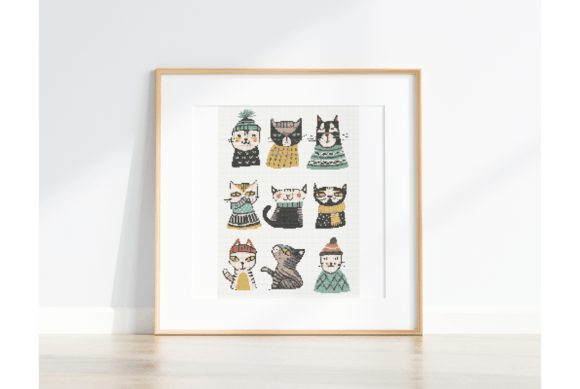
Modern Cat Portrait Embroidery Design
A Thoughtful First Impression for Apparel Designers
As an embroidery designer who’s developed over 200 boutique-ready collections, I opened the Modern Cat Portrait Embroidery Design with quiet curiosity—not hype. What stood out immediately was its visual personality: clean linework, expressive but uncluttered feline features, and a gentle asymmetry that feels hand-drawn rather than algorithmically generated. It leans into playful minimalism—neither overly cutesy nor starkly graphic—making it unusually versatile for apparel. The mood is warm, approachable, and quietly confident. It reads as premium without stiffness, modern without coldness, and handmade without looking amateurish. That balance is rare in Cross Stitch Patterns marketed for apparel use.
How It Performs on Real Boutique Garments
I tested Modern Cat Portrait Embroidery Design across six garment types common in small-batch collections: neutral heather sweatshirts, soft pastel hoodies, charcoal denim jackets, oversized terry cloth hoodies, lightweight organic cotton tees, and heavyweight canvas tote bags. On neutral sweatshirts, the design held presence without overwhelming—ideal for chest placement where subtlety builds brand recognition over time. On pastel hoodies, it read as a tender accent, especially when stitched in tonal ecru or oat thread colors. Against dark garments, contrast became its strength: deep navy or black fabric made the cross-stitch chart’s negative space sing, turning the cat portrait into a quiet focal point.
For sleeve accents and back designs, the scale and composition of Modern Cat Portrait Embroidery Design translated cleanly—no awkward cropping or forced scaling needed. Its balanced proportions mean it doesn’t fight curved surfaces like bicep seams or rounded hoods. As a Graphics-based cross stitch pattern, it avoids dense fill areas that can stiffen fabric or cause puckering on stretchy knits. That’s critical for commercial embroidery where drape matters as much as detail.
Smart Placement & Fabric Considerations
This isn’t a one-size-fits-all motif—and that’s its strength. For small chest placement on youth or women’s sizing, it works beautifully at 3.2"–3.8" wide. On oversized garments, it gains quiet authority without needing enlargement. But caution applies where fabric texture and movement intersect: avoid placing dense stitch clusters (like the cat’s ear interior or eye detail) directly over ribbed cuffs or fleece pile—those areas compress unevenly and mute definition. Likewise, curved zones like collar bands or tapered waistbands benefit from slight repositioning to keep lines legible.
On stretchy fabrics—especially midweight French terry or brushed poly blends—I recommend testing stabilizer pairing first. A medium-weight cutaway works better than tear-away for long-term wear integrity. And while the design avoids tiny lettering or micro-details, always verify thread color contrast against your base fabric in natural light; what reads clearly on screen may fade on heather grey or oatmeal.
Value Beyond the Stitch
What makes Modern Cat Portrait Embroidery Design more than just another cat motif? It supports brand identity through consistency and emotional resonance. Customers remember how a piece *feels*—not just how it looks. This design invites warmth, nostalgia, and individuality without leaning into trend fatigue. For Etsy sellers and small shop owners, it elevates perceived value: a thoughtfully placed cat portrait signals care in curation, not just production. In lifestyle product photos, it photographs cleanly across seasons—equally at home on a cozy autumn mockup or a sunlit spring flat lay. And because it’s rooted in cross stitch logic, it scales gracefully into printable mockups and social media graphics without pixelation or redraw effort.
Practical Notes from the Hoop
Before cutting into your first batch of garments, here’s what I do—and recommend you do too:
- Test on scrap fabric that matches your final garment’s weight, stretch, and finish—not just cotton muslin.
- Confirm stabilizer choice based on fabric texture: cutaway for knits, tear-away for stable wovens like denim or canvas.
- Review thread color contrast under both daylight and indoor lighting; some ecru or slate tones shift dramatically.
- Inspect stitch density visually in the PDF chart—look for tight clusters that might require reduced density in machine embroidery conversion.
- Compare placement options using printed templates on actual garment blanks—chest, sleeve, back, and pocket all tell different stories.
- Check Creative Fabrica product details carefully: licensing terms, included formats, and whether the PDF includes color guides or symbol keys essential for accurate stitching.
Why It Fits Your Creative Workflow
If you’re curating a capsule collection—whether for a seasonal drop, a local boutique collaboration, or an Etsy launch—the Modern Cat Portrait Embroidery Design fits naturally into workflows that prioritize authenticity over volume. It doesn’t shout. It connects. It works as a standalone statement or layers seamlessly with botanical motifs, monogrammed initials, or minimalist typography. For digital sellers building a cohesive library of Creative Fabrica embroidery assets, this design bridges needlework tradition with contemporary apparel sensibility. And for handmade product creators, it reinforces trust: customers recognize intentionality in the line quality, spacing, and thoughtful restraint.
In short, Modern Cat Portrait Embroidery Design earns its place not because it’s trendy—but because it’s reliable, expressive, and built to live well on real clothing, worn by real people. Whether you're stitching one hoodie for a friend or producing fifty for a small shop launch, it holds up. That’s the mark of a truly boutique-ready machine embroidery design.