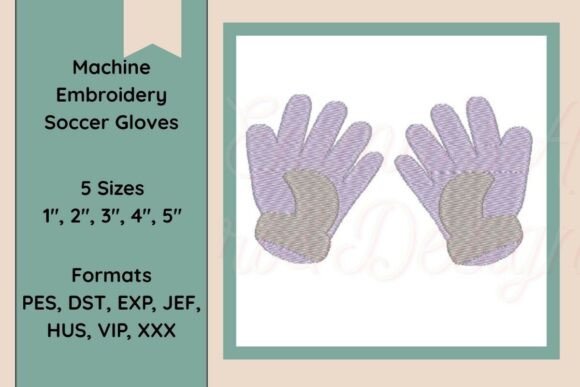
Soccer Gloves Embroidery Design
First Impression: Bold, Sporty, and Instantly Recognizable
As an embroidery designer who’s prepped over 200 craft fair booths, my first reaction to Soccer Gloves Embroidery Design is immediate: it’s bold, athletic, and unapologetically thematic. The title alone signals clear intent—this isn’t a subtle vine motif or abstract shape. It’s a focused, high-energy machine embroidery design built for fans, players, and families who live for the game. No farmhouse softness here; no minimalist ambiguity. This is crisp, confident, and ready to command attention on a crowded market table.
Where It Shines: Craft Fair Product Placement That Converts
In my booth setup—tote bags front-and-center, aprons draped over a wooden crate, tea towels folded beside embroidered patches—I’ve tested where Soccer Gloves Embroidery Design lands strongest:
- Tote bag design: Works brilliantly as a large, centered chest piece (10–12” wide). The gloves read clearly from 6 feet away—critical when shoppers are scanning dozens of stalls in under 30 seconds.
- Apron embroidery: Ideal placement is left-chest or lower right pocket. The sporty vibe pairs perfectly with coaching, youth league, or soccer mom branding—and feels authentically handmade, not mass-produced.
- Embroidered patch: A standout option. When heat-applied or sewn onto denim jackets or backpacks, this design reads like official team gear—without needing licensing. Great for quick batch production and impulse buys.
- Tea towel embroidery: Best at medium scale (5–7”) near the hem. On natural cotton or linen, the glove detail holds up beautifully—even after washing—making it a trusted small shop product for gift buyers.
- Caps and fabric pouches: Use only if the file includes a simplified version. Standard Soccer Gloves Embroidery Design may struggle on curved cap surfaces or tiny 4” pouch fronts unless digitized with reduced stitch density.
What Customers Notice First—And Why It Sells
At a craft fair, people don’t stop for “cute.” They stop for connection. Soccer Gloves Embroidery Design triggers instant recognition: a dad spotting it on a tote, a teen grabbing a patch for their backpack, a coach gifting an embroidered pillow cover to her goalkeeper. It’s emotionally resonant—not decorative filler. That resonance lifts perceived value: a $28 embroidered pillow cover feels premium next to generic florals because this design tells a story. And yes—it photographs exceptionally well for Etsy listings. Clean lines, strong contrast potential, and balanced negative space mean your printable mockup will convert browsers into buyers.
Production Reality Check: What Makes or Breaks Batch Success
This isn’t a “set-and-forget” embroidery file. As a working designer, I treat every Soccer Gloves Embroidery Design with three questions before cutting fabric:
- Is it legible at 3 inches? Tiny stitching in finger contours or webbing details can blur on textured towels or thick twill. If your digital embroidery file doesn’t include a simplified small-size variant, test it on scrap first.
- Does stitch density overwhelm common stabilizers? Dense areas around glove palms or wrist closures demand cutaway or tear-away + topping on dark fabric—or you’ll get puckering or thread shine that kills the handmade quality.
- Does it scale cleanly across product types? That same file may dazzle on a tote but drown a cap. Always confirm hoop size compatibility and adjust thread colors for contrast—especially on navy or charcoal fabrics where white thread can disappear.
Smart Booth & Brand Moves You Can’t Skip
Your craft fair table isn’t just selling products—it’s selling confidence in your craft. Soccer Gloves Embroidery Design strengthens your booth display when used intentionally:
- Show real finished product—not just printed mockups. Hang a stitched cap beside a patch sampler so customers feel texture and dimension.
- Group it with complementary designs (team numbers, ball motifs, “Goalkeeper” lettering) to suggest bundles—increasing average order value.
- Use it consistently across your Etsy seller profile, packaging stickers, and social banners. That repetition builds brand recognition faster than any ad spend.
- Label samples clearly: “Embroidered on organic cotton canvas” or “Digitally optimized for commercial embroidery”—it reassures serious buyers and wholesale inquiries.
Designer Notes You’ll Thank Yourself For Later
Before your first production run, do these six things:
- Test the Soccer Gloves Embroidery Design on scrap fabric matching your final product—same weight, weave, and color.
- Check thread contrast under both daylight and booth lighting. Neon orange thread pops on black, but fades on heather gray.
- Review spacing between glove elements—if fingers or straps run too close together, they’ll merge during stitching.
- Confirm hoop size requirements. Some versions need 6x10” or larger—limiting your machine options or requiring re-hooping mid-stitch.
- Inspect stitch density visually. Over 12,000 stitches? Add extra stabilizer or reduce density for towels and caps.
- Verify commercial licensing. Even if labeled “for personal use,” many digital embroidery files require separate permission for resale of finished product—don’t risk a takedown.
Final Thought: A High-Intent Design With Real Market Traction
Soccer Gloves Embroidery Design isn’t background noise. It’s a high-intent, category-specific asset—ideal for sports-themed handmade markets, youth league fundraisers, and fan-focused Etsy shops. It converts because it answers a question before the customer asks: “Where can I show my team pride—authentically?” When executed with care—right stabilizer, smart scaling, thoughtful fabric pairing—it delivers professional polish, emotional pull, and repeatable ROI. For craft fair sellers and embroidery business owners, this isn’t just another design. It’s a conversation starter, a gift anchor, and a booth standout—all stitched into one confident, sporty statement.