Abstract Fish Embroidery Review for Business Use
First Impression: Modern, Playful, and Professionally Versatile
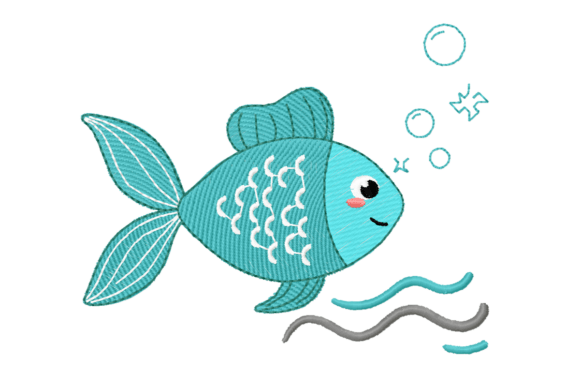
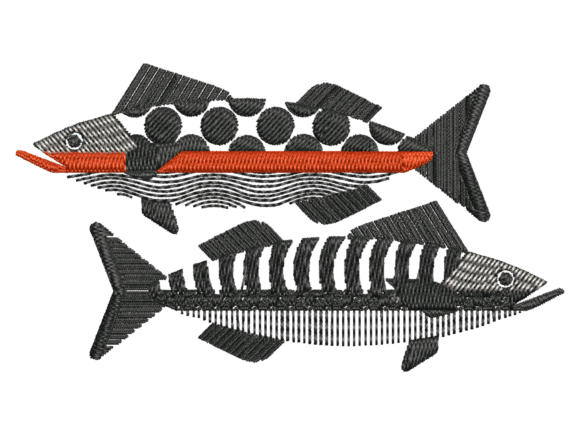
As an embroidery designer who’s developed hundreds of commercial designs for small businesses—from neighborhood bakeries to indie florists—I opened Abstract Fish Embroidery expecting a stylized aquatic motif. What I found was more nuanced: a confident, contemporary interpretation that balances artistic abstraction with clean stitchability. It doesn’t lean into cartoonish charm or hyper-realism—instead, it reads as intentional, design-forward, and quietly memorable. That makes it ideal for brands that want to signal creativity without sacrificing professionalism. Whether you’re a pet wellness studio, coastal boutique, or eco-conscious café, Abstract Fish Embroidery lands as friendly yet refined—not decorative filler, but a considered brand asset.
Where It Shines in Real Small Business Merchandise
This machine embroidery design excels where clarity, scalability, and character intersect. On embroidered patches—especially 2”–3” woven or chenille-style—it holds visual weight without overwhelming. As a chest logo on staff aprons or work shirts, its balanced negative space ensures legibility at arm’s length. For cap embroidery, the simplified silhouette avoids distortion on curved fronts, and its mid-density stitch count prevents puckering on structured cotton twill.
It also adapts beautifully to tactile applications: think tote bag design stitched onto natural canvas, sleeve accents on linen-blend uniforms, or subtle branding on reusable produce bags. Because it avoids fine linework or micro-details, Abstract Fish Embroidery translates reliably across fabric textures—from smooth poplin to nubby burlap. Etsy sellers and handmade product brands will appreciate how it elevates packaging accents (e.g., stitched tags on soap bundles or plant care kits) while reinforcing a cohesive, artisanal aesthetic.
For event merch or customer gifts—like limited-run caps or branded coasters—the design feels special without being overly literal. It invites curiosity rather than explanation, supporting brand storytelling through subtlety.
Use With Intention: Key Considerations for Commercial Embroidery
While highly adaptable, Abstract Fish Embroidery benefits from thoughtful placement and production planning:
- Small patch sizes under 1.5”: Test first. Some abstract elements may blur or lose definition—confirm readability before bulk production.
- Cap fronts and curved surfaces: The design’s open contours help, but always digitize with underlay and tapered pull compensation to maintain shape.
- Dark or textured uniforms: Review thread color contrast carefully. A high-contrast combo (e.g., bright teal on charcoal) enhances visibility; avoid low-differential pairings like navy-on-black unless using reflective or metallic thread.
- Frequent-wash items (aprons, chef coats): Confirm stitch density isn’t excessive—tight fills can stiffen fabric over time. Opt for optimized satin and fill settings suited to garment-grade polyester thread.
- Printable mockups: Render it in grayscale first to assess tonal balance. Abstract shapes rely heavily on light/dark relationships—what reads well digitally must hold up in monochrome embroidery previews.
Strengthening Brand Identity—Beyond Decoration
When used intentionally, Abstract Fish Embroidery does more than label—it communicates. Its modern abstraction signals thoughtfulness and differentiation, helping small businesses stand out in saturated markets (think: local coffee roasters competing with national chains). Unlike generic clipart-style fish icons, this digital embroidery file supports visual consistency across touchpoints: same motif scaled for a lapel pin, embroidered patch, and tote bag design builds recognition without repetition.
For handmade product brands, it subtly reinforces authenticity—abstract forms feel human-made, not algorithmically generated. That perception boosts customer trust and perceived value. And because it avoids cliché (no bubbles, no smiling fish), it sidesteps juvenile associations—critical for mature audiences or premium positioning.
Importantly, it scales gracefully into broader design systems. Pair it with minimalist typography on packaging, or echo its curves in custom illustrations—Abstract Fish Embroidery becomes a flexible anchor, not a stylistic dead end.
Practical Designer Notes Before You Stitch
Before deploying Abstract Fish Embroidery in client work or your own small business merch, run these checks:
- Test in black and white first—verify contrast and silhouette integrity across fabric types.
- Check minimum viable size: Resize to your smallest intended use (e.g., 1.25” patch) and inspect spacing between elements—tight gaps may collapse in stitching.
- Review thread color options against your brand palette. Does it support your primary, secondary, and neutral combinations?
- Confirm hoop size compatibility with your machine and frame setup—especially if layering with text or other design assets.
- Test on real fabric, not just stabilizer swatches. Fabric texture dramatically affects stitch lay and edge definition.
- Choose stabilizer wisely: lightweight cutaway for knits, tear-away for stable wovens, and fusible for delicate linens.
- Create a printable mockup for client sign-off—show it on actual garment photos, not blank templates.
- Compare alongside existing design assets: Does it harmonize with your logo, icon set, or packaging system—or create visual tension?
- Verify commercial licensing. Since this is a digital embroidery file, confirm usage rights cover your intended application—especially for resale merchandise or third-party fulfillment.
Final Thought: A Strategic Asset, Not Just a Design
Abstract Fish Embroidery isn’t merely another fish-themed embroidery file. It’s a versatile, production-smart tool built for small business reality: fast turnaround, varied substrates, budget-conscious runs, and brand-building impact. When paired with smart digitizing choices and intentional placement, it transforms everyday items—caps, totes, aprons—into quiet ambassadors of your business’s personality and values. For embroidery shops, apparel decorators, and makers who treat every stitch as a strategic decision, this design delivers far more than visual interest. It delivers readiness.