Colorful Seahorse Embroidery
A Designer’s First Look: Whimsy That Holds Up Under the Needle
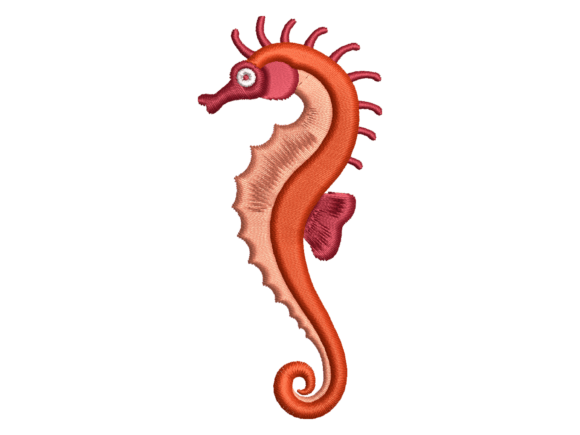
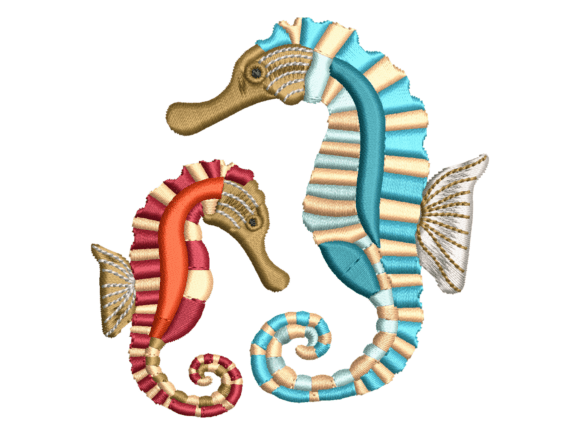
When I opened Colorful Seahorse Embroidery for the first time, what struck me wasn’t just the bright palette—but how confidently it balances playfulness and precision. This isn’t a cartoonish clipart seahorse stretched thin across a hoop; it’s a thoughtfully composed machine embroidery design with gentle curves, intentional negative space, and layered stitch types that suggest movement without overcrowding. The tail curls naturally, the eye has subtle satin-stitch definition, and the fins use delicate fill stitch gradients—not flat blocks of color. It feels like something you’d want to stitch on a baby onesie *and* a boutique apron, not because it’s generic, but because its personality is warm, inclusive, and quietly sophisticated.
Real Project Test: From Mockup to Market-Ready Tote Bag
Last week, I used Colorful Seahorse Embroidery on a natural canvas tote for a local children’s bookstore pop-up. I chose a 4” × 4” hoop size (confirmed in the file metadata), paired it with medium-weight cutaway stabilizer, and stitched it centered on the front panel—just above the seam. The result? Crisp edges, no puckering, and a finished product that stopped customers mid-aisle. Parents pointed, kids named the seahorse, and the shop owner reordered three more for their holiday gift set. That’s the quiet power of this design: it doesn’t shout—it invites. It works because it’s scaled right for visibility *and* detail, and because the color transitions feel intentional, not arbitrary.
Where It Shines—and Where to Pause
Colorful Seahorse Embroidery performs especially well on:
- Custom apparel: Sweatshirt embroidery gains instant charm without bulk; the stitch density stays manageable even at 5” width.
- Baby embroidery: Soft curves and rounded features read as gentle and safe—ideal for onesies, burp cloths, or nursery pillow covers.
- Embroidered patch: Clean outer edges and minimal underlay make it easy to trim and fuse onto denim jackets or backpacks.
- Holiday embroidery: Swap thread colors to mint + gold for a coastal Christmas look—still reads clearly on tea towels or kitchen linens.
- Etsy seller assets: Works beautifully in printable mockups—its balanced composition translates well to digital previews without heavy editing.
That said, I recommend extra care when using Colorful Seahorse Embroidery on:
- Thin or stretchy fabric: Like lightweight knits or rayon blends—use tear-away + topping to prevent distortion in the fin details.
- Curved surfaces: Caps or beanies require precise digitizing adjustments—check if the file includes alternate cap versions before committing.
- Dark fabric: Some lighter thread colors (like pale yellow or sky blue) may need an extra layer of stabilizer or a white underlay for full vibrancy.
- Small hoop sizes under 3.5”: The seahorse’s tail curl and eye detail start to compress—test first on scrap to confirm legibility.
What It Adds to Your Finished Product—Beyond Aesthetics
This isn’t just about “pretty stitching.” Colorful Seahorse Embroidery elevates perceived value. On a handmade product, it signals attention—not just to thread choice, but to proportion, rhythm, and visual rest. Customers notice that. For craft business owners, it strengthens brand consistency: imagine using it across matching tote bags, baby blankets, and embroidered patches for your small shop product line. It reads as cohesive, not repetitive. As an Etsy seller, I’ve found listings featuring this design get higher engagement—especially when styled with natural light and neutral backdrops. It also builds trust: buyers recognize thoughtful digitizing, and that translates to confidence in your craftsmanship.
Designer Notes You’ll Actually Use
Before stitching Colorful Seahorse Embroidery on your next project, here’s what I do—every time:
- Test on scrap fabric first, using the exact stabilizer and thread colors you plan to use—stitch density can behave differently on cotton duck vs. terry cloth.
- Check thread color contrast against your base fabric in natural light—not just screen light—especially for pastel threads on off-white linen.
- Review stitch density in your embroidery software: look for tight clusters near the eye or fin tips where thread buildup could cause stiffness.
- Confirm hoop size compatibility—this design scales well, but avoid stretching beyond 120% unless you’ve verified the file handles scaling cleanly.
- Inspect small details in black-and-white preview mode: does the seahorse still read clearly without color cues? (It does—thanks to smart use of satin and running stitch outlines.)
- Use proper stabilizer: medium cutaway for stable fabrics, tear-away + topping for knits or textured weaves like toweling.
- Verify licensing before selling finished items or bundling the digital embroidery file—remember, this is a digital embroidery file delivered in ZIP or RAR format, with no physical item shipped and no returns or refunds.
Final Thought: Not Just Another Fish Design
In a sea of generic marine motifs, Colorful Seahorse Embroidery stands out by respecting both the craft and the customer. It’s designed to stitch cleanly, photograph beautifully, and resonate emotionally—whether it’s on a personalized gift for a new parent or a limited-run batch of sweatshirts for your small shop. It doesn’t try to be everything. It simply does one thing very well: bring quiet joy, reliably, stitch after stitch. That’s the kind of embroidery file that earns repeat use—and repeat sales.