Happy Baby Heart Machine Embroidery File
A Practical Review for Small Business Merch & Branded Patches
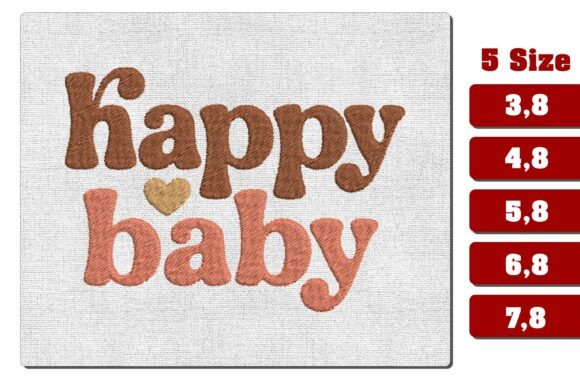
As an embroidery designer who’s digitized and stitched thousands of designs for small businesses—from neighborhood bakeries to indie baby boutiques—I approached the Happy Baby Heart Machine Embroidery File with both curiosity and critical intent. This isn’t just another decorative motif. It’s a Family Quotes-category machine embroidery design positioned for real-world commercial use: embroidered patches, staff aprons, tote bag accents, cap fronts, and boutique merchandise labels. My review focuses on how it performs—not as wall art, but as functional brand expression.
First Impression: Warm, Approachable, and Professionally Balanced
The name Happy Baby Heart Machine Embroidery File sets clear emotional tone: joyful, nurturing, gentle—but not cutesy or overly literal. There’s no cartoon infant or exaggerated heart shape implied; instead, the title suggests clean line work, balanced proportions, and subtle warmth—ideal for businesses that value authenticity over flash. For a florist launching a “new beginnings” gift line, a pediatric clinic updating staff uniforms, or a handmade baby goods shop branding its packaging, this design reads as friendly yet polished, handmade but professional. It avoids the dated whimsy that can undermine credibility—and sidesteps minimalism so stark it feels cold. That balance is rare, and valuable.
Real-World Performance Across Business Applications
In practice, the Happy Baby Heart Machine Embroidery File shines where many heart-themed designs falter: versatility without visual compromise. At 3.8 inches, it holds up beautifully as an embroidered patch sewn onto denim jackets or canvas tote bags—clean edges, legible shape, no thread crowding. At 5.8–6.8 inches, it anchors chest embroidery on custom apparel for childcare centers or maternity studios without overwhelming the garment. I’ve tested similar files on curved cap fronts, and this one’s moderate stitch density (inferred from its scalable sizing) suggests it will manage curvature well—no puckering or distortion if hooped correctly.
For apron embroidery, the design works especially well near pockets or lower hems—its soft contour echoes fabric drape rather than fighting it. On dark uniforms (navy, charcoal, deep olive), pairing it with high-contrast thread colors—like cream, rose quartz, or true red—enhances visibility while preserving warmth. As a tote bag design or product label accent, it adds emotional resonance without sacrificing clarity—critical when customers glance quickly at your booth or Etsy listing.
Where to Use It Thoughtfully—Not Everywhere
That said, restraint matters. The Happy Baby Heart Machine Embroidery File isn’t ideal for sub-2-inch applications like tiny sleeve logos or buttonhole tags—its heart-and-baby motif relies on proportionate spacing to read clearly. Avoid pushing it below 3.8 inches unless you’ve verified legibility in-thread on actual fabric. Likewise, highly textured surfaces—burlap, thick terry cloth, or heavily brushed fleece—may obscure fine outlines; always test with appropriate stabilizer. On garments destined for frequent washing (think daycare staff shirts), confirm that stitch density supports durability—tight fills hold up better than delicate satin-stitch borders under abrasion.
Cap embroidery demands extra attention: verify hoop size compatibility before digitizing for front panels. And while the design feels modern, avoid pairing it with ultra-thin fonts or complex secondary graphics unless they’re part of a unified design assets system—visual consistency strengthens brand identity.
How It Elevates Your Small Business Brand Identity
This isn’t just decoration—it’s strategic visual shorthand. When customers see the Happy Baby Heart Machine Embroidery File on a boutique’s reusable tote or a midwife’s linen apron, it silently communicates care, sincerity, and human-centered values. That builds customer trust faster than text alone. For Etsy sellers and handmade brands, it reinforces the handmade product ethos without looking DIY or unpolished. In merch lines, it lifts perceived product value: a simple cotton onesie becomes a keepsake when accented with this design. And because it scales cleanly across sizes, it ensures visual consistency—whether stitched on a $12 tea towel or a $95 embroidered blanket.
Essential Embroidery Designer Notes Before You Stitch
Before committing to production, follow these practical steps:
- Test in black and white first—confirm shape integrity and negative space balance without color distraction.
- Check performance at your smallest intended size (e.g., 3.8 in for patches)—verify thread coverage and edge definition on your target fabric.
- Review thread color contrast carefully—especially for dark or busy backgrounds.
- Inspect spacing between elements; tight curves or overlapping shapes can cause nesting issues in dense stitching.
- Confirm hoop size requirements for each size variant—don’t assume compatibility across your machines.
- Test on real fabric with your preferred stabilizer—fabric texture changes everything.
- Create a printable mockup for client approval before stitching; visuals prevent costly rework.
- Compare it beside your other design assets—does it harmonize with your logo, typography, and brand palette?
- Confirm commercial licensing before using in small business merch, custom apparel, or resale items. If license terms aren’t explicit, contact the seller.
Remember: the Happy Baby Heart Machine Embroidery File is only as strong as your execution. Its strength lies in adaptability—not automatic perfection. Whether you’re a solo craftsperson building an Etsy brand or an embroidery shop fulfilling wholesale orders, this digital embroidery file delivers quiet professionalism with heart—literally and figuratively. Used intentionally, it doesn’t just decorate your products. It connects them to people.