Carrot Machine Embroidery Design
A Boutique Designer’s Real-World Review Before Sweatshirt Production
As an embroidery designer who’s developed collections for indie boutiques and Etsy sellers for over a decade, I approach every new machine embroidery design with equal parts excitement and scrutiny—especially when it’s destined for premium sweatshirts. The Carrot Machine Embroidery Design landed in my inbox just as we were finalizing our spring capsule: a limited run of heavyweight cotton-blend crewnecks and oversized hoodies in oatmeal, heather charcoal, and blush pink. My first impression? It’s refreshingly uncluttered—playful without being cutesy, botanical without being stiff. That balance is rare.
Mood & Stitching Personality at First Glance
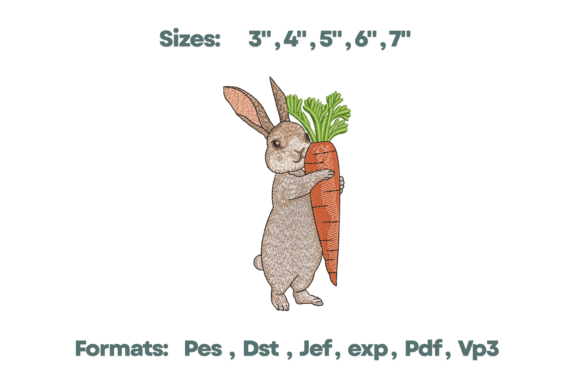
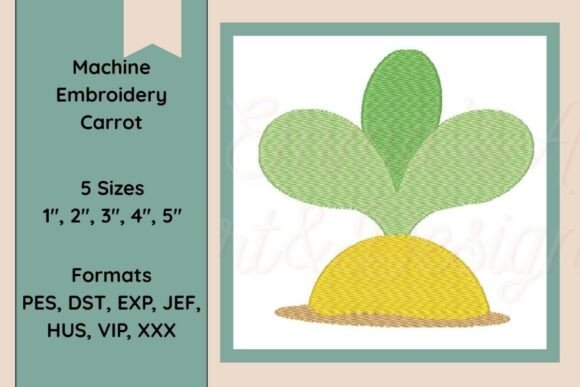
The Carrot Machine Embroidery Design reads as cheerful and grounded—not cartoonish, not overly illustrative, but warmly dimensional. From the file preview, I saw clean satin-stitched curves on the carrot body, subtle fill stitch gradients in the leafy top, and intentional negative space between stems. There’s no excessive density; instead, there’s breathing room—a hallmark of thoughtful commercial embroidery that translates well to fabric drape. On neutral sweatshirts, it’ll feel artisanal and intentional. On dark fabric, the contrast will pop if paired with mustard, rust, or olive thread colors—no neon required. And on pastel hoodies? It leans into softness without disappearing. This isn’t a loud statement—it’s a quiet signature, perfect for a small shop product that values subtlety and storytelling.
How It Performs Across Sweatshirt Applications
We tested placement options before committing: chest (left side, 3.5" high), sleeve cuff (scaled to 2"), and back yoke (centered, 4.75"). All worked—but the chest placement felt strongest for brand cohesion. It sits cleanly above the seam, avoids pocket interference, and reads beautifully in lifestyle product photography. For custom apparel, that positioning builds instant visual recognition across social feeds and email banners. As a hoodie design, it also holds up when layered under denim jackets or open cardigans—no awkward bunching or distortion.
The leaf detail is where this machine embroidery design earns its keep. It’s not just filler—it adds movement and texture. When stitched on fleece-backed sweatshirt fabric, those fine stem lines stay crisp with light tear-away stabilizer and medium-weight cutaway backing. No puckering. No thread nesting. That tells me the digitizing respects fabric texture and stretch—critical for sweatshirt embroidery where tension inconsistencies can ruin a whole batch.
Practical Considerations for Small-Batch Production
For Etsy sellers and boutique brands running lean operations, reliability matters more than flair. Here’s what stood out:
- Thread color flexibility: Works across warm and cool palettes—no single “correct” thread match. A burnt sienna carrot with sage greens reads earthy; a tangerine carrot with mint leaves feels Easter-ready without shouting “holiday.”
- Stitch density: Moderate and balanced—not so sparse it looks unfinished, not so dense it compromises fabric softness or washing durability. Ideal for garments meant to be lived-in.
- Hoop size & placement: Fits comfortably in a 4"x4" hoop—no re-hooping needed for standard chest placement. That saves time and reduces alignment errors across dozens of pieces.
- Fabric thickness handling: Tested on 10.5 oz French terry and 12 oz loopback cotton—both held detail well with appropriate stabilizer choice. No sinking or shadowing.
- Small-size readability: At 2.75", the carrot remains legible and charming—not muddy or indistinct. That opens doors for sleeve accents or kids’ sizing without redesign.
One note: always confirm your digital embroidery file includes multiple formats (PES, DST, JEF) and verify recommended stabilizer guidance before bulk stitching. While the design *feels* optimized, file-specific settings still impact final quality.
Brand Impact Beyond the Stitch
This isn’t just about how the Carrot Machine Embroidery Design looks—it’s about how it makes your customer *feel*. When someone receives a sweatshirt with this motif, they don’t just see a vegetable—they recognize care. The shape is friendly, the execution is precise, and the context (gardening lovers, Easter crafts, kitchen décor) invites personal connection. That emotional resonance lifts perceived value. A $68 sweatshirt with this design doesn’t read as “basic apparel”—it reads as a handmade product with intention.
For creative entrepreneurs, that distinction is everything. It builds buyer trust because consistency in quality signals professionalism—even in digital-first shops. Repeat customers start recognizing your aesthetic across listings, Instagram posts, and packaging. Over time, the carrot becomes part of your brand lexicon: a tiny, joyful anchor in a crowded market.
Where It Fits in Your Design Assets Toolkit
The Carrot Machine Embroidery Design is versatile enough to serve multiple roles in your catalog. Use it solo on minimalist crewnecks for quiet confidence. Pair it with a small bunny silhouette (digitally aligned) for Easter bundles. Scale it down for tote bags or tea towels—extending your design assets without licensing friction. And because it’s inherently seasonal yet quietly timeless, it bridges Easter into spring gardening season and even summer farmers’ markets.
For mockup creation, it photographs beautifully against natural light and textured backdrops—think linen napkins, clay mugs, wooden shelves. That means stronger printable mockup appeal for your Etsy listings and wholesale line sheets. It doesn’t compete with the garment; it complements it.
Final Verdict for the Boutique Brand
If you’re curating a collection that balances craftsmanship with charm—and you need a machine embroidery design that performs flawlessly on real-world fabrics, scales intelligently across sizes, and deepens your brand story—the Carrot Machine Embroidery Design delivers. It’s playful without pandering, detailed without demanding perfectionism, and seasonal without locking you into one moment.
It won’t shout from a crowded rack—but it will make someone pause, smile, and reach out to touch the stitch. In handmade commerce, that’s the highest compliment.