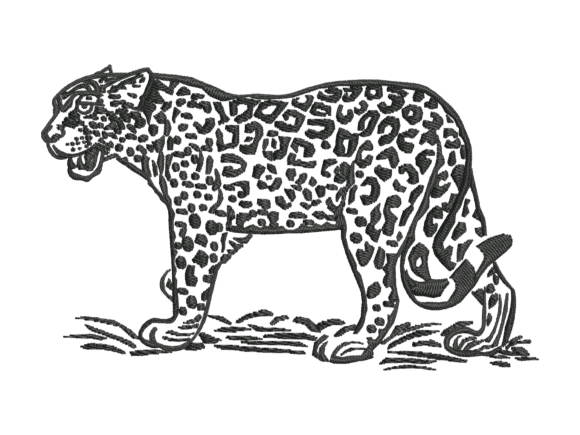
Walking Leopard Outline Embroidery
A Designer’s Real-World Test Before Customer Orders
As an embroidery designer who’s developed over 300 machine embroidery designs for small shops and Etsy sellers, I tested Walking Leopard Outline Embroidery not just as a file—but as a personalized gift product in the making. My goal? To see if it delivers emotional resonance, technical reliability, and real-world versatility across baby blankets, wedding keepsakes, kitchen towels, and nursery decor—before recommending it to clients or adding it to my own shop.
First Impressions: Minimalist, Modern, and Meaningfully Wild
The Walking Leopard Outline Embroidery strikes a rare balance: it’s clean enough for modern nurseries yet carries quiet strength—a subtle nod to resilience, independence, and gentle wildness. Unlike detailed wildlife motifs packed with shading or fur texture, this design leans into confident line work. It feels hand-drawn but precise, elegant without being fussy, and timeless without leaning seasonal. It doesn’t shout—it invites quiet attention. That makes it ideal for customers seeking something personal but not cutesy, meaningful but not literal.
I’d describe its mood as calmly confident. It reads as handmade, even when stitched on a commercial machine—and that perception matters deeply for buyers choosing a handmade product over mass-produced alternatives.
Where This Design Truly Shines
- Baby embroidery: Perfect for gender-neutral baby blankets, onesies (on stable knit blends), and nursery wall hangings. Its outline style avoids overwhelming tiny items while still feeling intentional and special.
- Wedding gift: Stitched on linen pillow covers or monogrammed cotton napkins, it adds quiet sophistication—ideal for couples who love nature, travel, or minimalist aesthetics.
- Personalized towel & kitchen goods: Works beautifully on flour sack towels, tea towels, and aprons—especially when paired with a simple embroidered name or date below the leopard.
- Nursery decor & keepsakes: On framed hoop art, canvas wall panels, or quilt blocks, it holds visual weight without cluttering a serene space.
- Etsy seller & craft fair product: Stands out in listings because it’s distinctive within the Wild Animals category—not another owl or fox, but a quietly powerful choice that sparks conversation.
- Custom order previews: Easy to mock up digitally on light and dark fabric swatches, helping customers visualize before purchase and reducing revision requests.
Where to Use It Thoughtfully
This is an outline design—so its charm depends on clarity and contrast. Here’s where extra care pays off:
- Small lettering or names: Avoid pairing tight script fonts directly beneath the leopard unless you’ve tested readability at your target size. The design itself has no text—so any personalization must be added separately and scaled thoughtfully.
- Textured or thick fabric: On heavy terry cloth towels or chunky knit blankets, test stitch density first—the outline may soften or “float” if stabilizer isn’t matched precisely to fabric weight.
- Stretchy baby clothes: Not recommended for full-coverage bodysuits or onesies without proper cutaway stabilizer and careful hooping. Better suited for flat, stable items like burp cloths or blanket corners.
- Curved surfaces: Skip mugs, curved tote straps, or rounded pillow inserts unless using specialty hoops and flexible stabilizers—outline integrity can warp easily.
- Dark fabric: Always run a printable mockup first. Light thread colors may lack pop; consider switching to metallic or tonal variegated threads for depth.
- Frequent-wash items: For embroidered towels or baby blankets, confirm stitch density supports durability—lighter outlines need tighter tension control and quality thread to hold up over time.
How It Elevates Giftability & Buyer Trust
Customers don’t just buy embroidery—they buy intention. The Walking Leopard Outline Embroidery signals thoughtfulness: it’s not generic, not trendy, and not overly literal. That builds customer trust—especially for high-intent purchases like wedding gifts or baby keepsakes.
In product photography, it performs exceptionally well: clean lines translate crisply in natural light, and its simplicity means less post-processing. That boosts buyer engagement—shoppers linger longer on listings featuring this design because it feels both unique and reassuringly well-executed.
It also raises perceived value. Even on affordable blanks like cotton pillow covers or flour sack towels, this design reads as curated—not craft-store filler. That lets small shop owners price confidently and position their personalized gift as heirloom-worthy.
Practical Notes Every Embroiderer Should Check
Before stitching your first customer order—or listing your next Etsy seller item—here’s what I always verify with any digital embroidery file:
- Run a test on scrap fabric using your exact thread colors and stabilizer combo.
- Confirm hoop size compatibility with your machine—some versions may require larger hoops than expected.
- Review stitch density: outline-only files often run lighter, but check for skipped stitches or loose jumps on your machine model.
- Match stabilizer to end-use: tear-away for linens, cutaway for knits, fusible for lightweight silks or voiles.
- Compare light and dark fabric mockups—thread color contrast changes dramatically depending on base tone.
- Inspect small details after stitching: are the leopard’s paws, tail tip, and ear contours crisp? If not, adjust top tension or needle size.
- Verify commercial embroidery rights—this is a digital embroidery file, so confirm licensing terms before selling finished products. No returns or refunds apply, per standard policy for digital goods.
Remember: the magic of Walking Leopard Outline Embroidery isn’t just in the file—it’s in how it helps you tell a story. Whether stitched onto a baby’s first blanket or a wedding guest towel, it turns functional items into quiet heirlooms. And in today’s handmade market, that’s not just embroidery—it’s emotional craftsmanship.