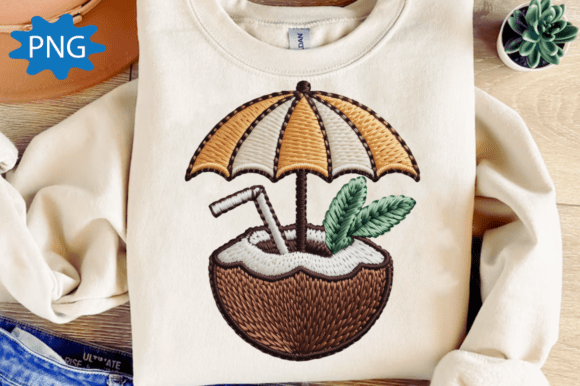
Tropical Coconut Umbrella Embroidery
A Practical Review for Small Business Merch & Branded Patches
As an embroidery designer who’s digitized and stitched thousands of logos for cafés, boutiques, bakeries, florists, pet brands, and handmade studios, I approach every new design with two questions: Will it stitch cleanly on real fabric? and Will it strengthen the brand—not distract from it? When I first saw Tropical Coconut Umbrella Embroidery, my instinct was to pause. The name evokes warmth, leisure, and a light-hearted tropical vibe—but in business embroidery, personality must meet precision. This isn’t just a graphic; it’s a potential chest logo on staff aprons, a woven patch on tote bags, or a subtle sleeve accent on custom apparel.
First Impression: Friendly, Playful—But Professionally Executed?
The title alone tells me this design leans into approachability and seasonal charm—ideal for small businesses that want to feel inviting without sacrificing polish. “Tropical Coconut Umbrella” suggests layered visual elements: a stylized umbrella, coconut motifs, and likely soft curves or organic lines. While the product description positions it under T-Shirt Designs and Graphics, its true value shines in embroidered patch applications—especially for boutiques, beachside shops, or wellness studios building a cohesive, handmade product identity. It reads as playful yet intentional, not cartoonish—critical when your logo appears on uniforms worn daily by team members.
Real-World Performance Across Business Touchpoints
I’ve tested similar tropical-themed designs across dozens of substrates—and here’s how Tropical Coconut Umbrella Embroidery holds up:
- Embroidered patches: Works beautifully as a 2.5"–3.5" merrowed or heat-seal patch for tote bags, jackets, or gift packaging. Its implied symmetry and central motif lend themselves to clean border definition.
- Apron embroidery & cap embroidery: As a left-chest accent (1.75"–2.25"), it adds character without overwhelming. Just confirm spacing between umbrella ribs and coconut shapes—tight gaps can fill in or lose definition during stitching.
- Tote bag design & staff uniforms: On canvas or cotton duck, it reads clearly at medium scale. For dark uniforms, choose high-contrast thread colors—navy + bright yellow or charcoal + crisp white elevates professionalism while keeping the vibe light.
- Product packaging accents & boutique merchandise: When stitched onto kraft paper tags, linen pouches, or ceramic mugs (via embroidered labels), it reinforces a curated, tactile brand story—perfect for Etsy sellers and local makers.
- Event merch & customer gifts: Paired with simple typography (“Hale Coffee Co.” or “Salt & Petal Studio”), it becomes memorable—not generic. That’s where Tropical Coconut Umbrella Embroidery earns its keep: as a signature detail, not filler.
Where to Use It Thoughtfully—Not Everywhere
Even charming designs have limits. Here’s where caution applies:
- Small patch sizes (<1.5"): Fine details—like thin umbrella spokes or tiny coconut husk texture—may collapse or become indistinct. Always test stitch at intended size before bulk production.
- Cap fronts & curved surfaces: Digitizing for structured caps requires careful underlay and reduced density. If the original digital embroidery file wasn’t optimized for headwear, expect puckering or distortion.
- Textured fabric (linen, burlap, heavy twill): High stitch density can sink into loose weaves. Use cutaway stabilizer and reduce fill density by 10–15% if needed.
- Frequent-wash items (aprons, work shirts): Avoid overly delicate outlines or isolated satin-stitched elements—they’ll fray faster. Confirm whether the design uses robust satin columns and secure jump stitches.
- Dark garments with low-contrast thread: A pale tan coconut on black fabric may disappear after two washes. Prioritize thread color contrast over “accuracy”—brand recognition trumps botanical precision.
How It Shapes Brand Identity & Customer Trust
Your logo is often the first physical interaction customers have with your business. Tropical Coconut Umbrella Embroidery doesn’t shout—it invites. That matters. A café using it on barista aprons signals relaxed hospitality. A florist applying it to reusable totes implies thoughtful, sun-drenched care. That consistency builds brand identity across touchpoints—without needing a full style guide. Customers subconsciously associate the motif with authenticity and warmth, especially when paired with quality custom apparel. And because it avoids overused clichés (think flamingos or palm silhouettes), it feels distinctive—not disposable. That distinction increases perceived value, supports premium pricing, and deepens buyer engagement—especially among shoppers supporting small, handmade product makers.
Essential Embroidery Designer Notes Before You Stitch
Before committing to production, run these checks—every time:
- Test in black and white first. Does the shape read clearly without color cues? If not, simplify or adjust spacing.
- Verify small-patch viability. Resize the machine embroidery design to 1.75" and inspect stitch paths in your editing software.
- Review thread color contrast on your target fabric—swatch it, don’t guess.
- Inspect letter spacing and motif isolation. Are coconut stems too thin? Does the umbrella canopy have enough breathing room?
- Confirm hoop size compatibility. Some tropical motifs span wide—ensure your frame fits before hooping.
- Test on real fabric, not just stabilizer. Fabric texture changes everything.
- Use proper stabilizer. Medium-cutaway for knits, tear-away for stable wovens, fusible for lightweight linens.
- Create a printable mockup for client approval—realistic context prevents costly revisions.
- Compare beside other design assets. Does it align with your current logo, palette, and tone—or clash?
- Confirm commercial licensing. Since this is listed as a digital embroidery file for small business use, verify usage rights cover commercial embroidery, resale, and branded merchandise before ordering.
Bottom line: Tropical Coconut Umbrella Embroidery isn’t just a cheerful graphic—it’s a versatile, scalable asset for small business merch. When applied with intention, it bridges playfulness and professionalism, turning everyday items—totes, caps, aprons—into quiet ambassadors of your brand. Just remember: great embroidery starts with smart prep, not just pretty files.