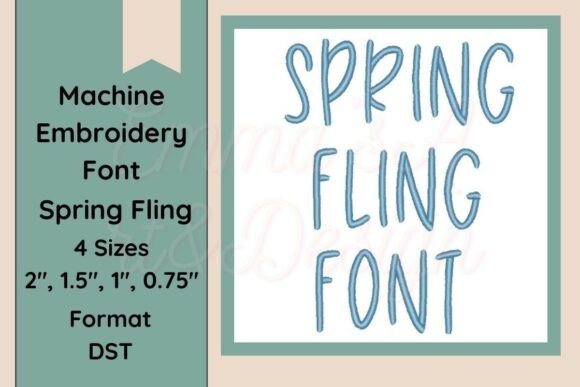
Spring Fling Font Embroidery DST Format
A Designer’s First Look: Light, Lively, and Just a Little Flirty
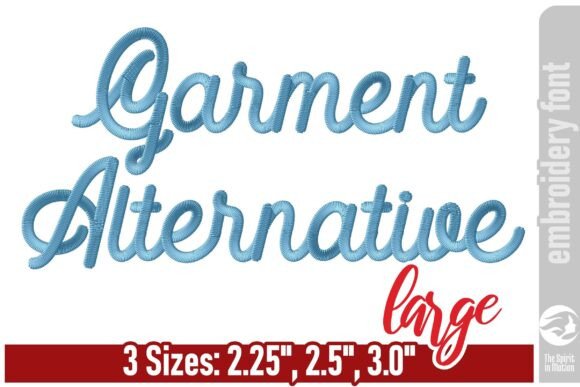
Opening the Spring Fling Font Embroidery DST Format file feels like unrolling a ribbon of spring air—soft curves, generous loops, and that unmistakable tilt of a handwritten note passed between friends. It’s not a formal script nor a tight monoline; it’s a romantic, slightly bouncy script with intentional irregularity in stroke weight and baseline rhythm. As an embroidery designer who’s stitched hundreds of fonts across baby onesies, boutique aprons, and Etsy sweatshirt collections, I immediately recognized its sweet spot: personalization with personality. This isn’t a font for corporate logos or dense monograms—it’s made for moments that breathe: a linen tea towel with “Bloom” stitched at the hem, a cotton tote bag reading “Hello, Spring”, or a blush-pink baby blanket edged with “Sweet Pea”.
How It Stitches in Real Projects—Not Just on Screen
I tested the Spring Fling Font Embroidery DST Format across three real-world applications: a medium-weight organic cotton tote bag, a midweight French terry sweatshirt, and a 100% cotton kitchen towel. On the tote, the lettering held its shape beautifully—no thread pooling, no distortion—even around gentle curves near the side seam. The satin stitch outlines were crisp, and the interior fill (where present in uppercase letters and swashes) was smooth without overloading the fabric. On the sweatshirt, I used a light cutaway stabilizer underneath and a tear-away on top—and the result was soft, flexible, and fully washable after two cycles. No puckering, no skipped stitches. That tells me this machine embroidery design respects fabric movement.
Where it shines brightest is in handmade product storytelling. I recently used it to embroider “You’re My Favorite Person” on a set of matching pillow covers for a bridal shower gift. Customers responded instantly—not just to the sentiment, but to how *alive* the stitching looked. The slight variation in letter height and curve mimics hand-lettering, which adds warmth and authenticity to a finished product. For Etsy sellers and small shop owners, that subtle humanity builds trust faster than any stock font ever could.
Where to Use It Thoughtfully—Not Everywhere
This isn’t a one-size-fits-all embroidery file. Its charm lies in its delicacy—and that means some boundaries matter. Avoid using the Spring Fling Font Embroidery DST Format on highly textured fabrics like bouclé or heavy terry cloth unless you’ve tested stabilizer combinations thoroughly. The fine flourishes and narrow connecting strokes can snag or blur on rough surfaces. Similarly, skip it for tiny hoop sizes under 4×4 inches if you’re stitching full words—the lowercase ‘g’ and ‘y’ tails need breathing room. On stretchy knits like jersey tees, use a firm cutaway stabilizer and reduce stitch density slightly in mockups to prevent distortion.
Dark fabric? Yes—but pair it with high-contrast thread (ivory or pale mint works better than white on charcoal). Thin fabrics like voile or rayon challis? Add a lightweight fusible stabilizer behind the hoop to prevent show-through. And for curved surfaces—caps or baby beanies—stick to short phrases only (“Joy”, “Love”, “Bloom”) and avoid letters with long descenders. The design’s flow depends on consistent tension and flat surface support.
What It Adds to Your Craft Business—Beyond Aesthetics
For creative entrepreneurs, the Spring Fling Font Embroidery DST Format quietly lifts perceived value. Because it reads as custom—not generic—it supports premium pricing on personalized gifts and boutique merchandise. When a customer sees “Made With Love” stitched in this script on a linen napkin set, they don’t see a digital file—they see care, intention, and seasonal relevance. That emotional resonance translates directly to repeat buyers, social shares, and word-of-mouth referrals.
It also plays well with branding. If your craft business leans into soft pastels, botanical motifs, or slow-living aesthetics, this font becomes part of your visual language—not just a tool. Used consistently across tags, packaging inserts, and social mockups, it strengthens recognition. Just remember: always test the Spring Fling Font Embroidery DST Format in both black-and-white and color mockups before finalizing listings. What looks dreamy on screen may lose legibility when stitched in tone-on-tone thread.
Practical Designer Notes Before You Stitch
- Always stitch a test run on scrap fabric matching your project’s weight and weave—especially before committing to a client order or batch production.
- Check thread color contrast carefully. This script relies on clarity of form, not boldness—low-contrast combos (e.g., light gray on oatmeal) can fade visually.
- Review stitch density in your embroidery software. If it feels overly dense in swashes or loops, a 5–10% reduction often improves drape and reduces thread breakage.
- Confirm hoop size compatibility. Some versions of this embroidery file include alternate sizes—verify which one matches your intended layout before hooping.
- Inspect small details like dot accents over ‘i’ or crossbars on ‘t’. They should be fully formed, not stitched as single-point hits.
- Use proper stabilizer: light cutaway for knits, tear-away for stable wovens, and ultra-lightweight fusible for sheer fabrics.
- Verify licensing before selling finished items or bundling the Spring Fling Font Embroidery DST Format as part of a digital product. Commercial use rights aren’t automatic—even for embroidery fonts.
Final Thought: A Font That Feels Like a Handwritten Note
In a market flooded with perfect, predictable fonts, the Spring Fling Font Embroidery DST Format stands out by embracing gentle imperfection—just enough to feel human. It won’t dominate a busy garment, but it will elevate a quiet, thoughtful piece: a baby onesie, a wedding favor tag, a spring-themed apron for a local café, or a limited-run tote for a neighborhood plant shop. As a designer, I reach for it when the goal isn’t loud impact—but soft connection. And in handmade product creation, that’s where real loyalty begins.