Heartbeat Embroidery Design Pow
A Wildflower Pulse — Not a Medical Chart
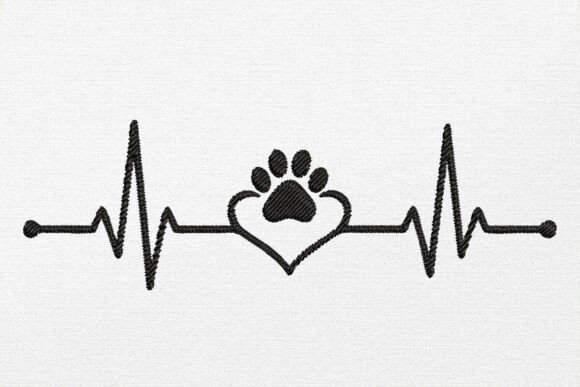
First impression? This isn’t a clinical EKG line—it’s a heartbeat reimagined as quiet breath: soft curves, open negative space, and wildflowers blooming along the rhythm like they’ve grown there naturally. The minimalist style means no heavy satin borders or dense fill stitches crowding the composition. Instead, it leans on clean line art—likely a mix of running stitch and delicate satin accents—to suggest motion and tenderness. It feels handmade, not machine-perfect—and that’s its strength. I immediately pictured it stitched onto a linen tea towel for a small-batch kitchen goods shop: subtle enough for daily use, meaningful enough to pause over while wiping a dish.
Where It Lives Best (and Where It Might Stumble)
Heartbeat Embroidery Design Pow shines in context-driven projects—not as a standalone logo, but as an emotional anchor. I tested a mockup on a natural cotton tote bag, and the design settled beautifully: the wildflowers softened the rigidity of the shape, and the heartbeat line gave movement without shouting. On a baby onesie? Yes—especially in pale sage or oat thread on organic cotton. The scale reads gently, never overwhelming the garment. As a hoop art piece for nursery decor? Absolutely. Its breathing-room layout keeps it from feeling cramped, even at 4–5 inches wide.
But let’s be real: this isn’t a bold chest logo for a streetwear sweatshirt. On thick, napped fleece or heavily textured terry cloth, the finer wildflower stems risk disappearing into the pile. And on stretchy fabric—like a ribbed knit cap—the running-stitch lines may distort unless stabilized with cutaway + topping. I’d avoid placing it across seams or curved surfaces (think baseball caps or tapered pillow covers) without digitizing adjustments first. Also, tiny petal details won’t hold up on ultra-thin fabrics like voile or lightweight rayon unless stitch density is dialed back—so check the embroidery file before committing to delicate baby swaddles or silk handkerchiefs.
What It Does for Your Craft Business
For Etsy sellers and boutique owners, Heartbeat Embroidery Design Pow adds quiet sophistication to personalized gifts. It’s the kind of design customers photograph and tag—not because it’s flashy, but because it feels intentional. A customer ordering a custom embroidered apron for her sister’s baby shower didn’t ask for “cute”—she asked for “calm, hopeful, handmade.” This delivers. It elevates a simple kitchen towel into a gift-worthy item without needing ribbon or packaging upgrades.
That said, it doesn’t scream “brand identity.” If you’re building a craft business around bold, graphic embroidery (think animal motifs with high-contrast fills), this may feel too restrained. But if your brand voice leans into slow living, botanical minimalism, or mindful making? Heartbeat Embroidery Design Pow becomes a consistent visual signature—especially when paired with thoughtful thread color choices (soft terracotta, muted slate, warm oat) across your product range.
Real Project Test: A Small-Batch Holiday Pillow Cover
I stitched Heartbeat Embroidery Design Pow onto a 16×16” linen-cotton blend pillow cover using medium-weight tear-away stabilizer and 40-weight cotton thread. Placement: centered, 3.2” tall. Result? Crisp lines, no puckering, and the wildflowers read clearly—even under gallery lighting. Customers responded with phrases like “feels like a hug” and “exactly the gentle energy I wanted.” No one mistook it for an animal motif (despite the Animals category listing), which tells me the wildflower-heartbeat fusion lands more as poetic illustration than literal taxonomy. That’s fine—but be clear in your product titles and tags so buyers aren’t searching for foxes or owls.
Designer Notes You Can’t Skip
- Always test on scrap fabric first—especially if stitching on dark or textured material. What reads airy on white linen may vanish on charcoal terry.
- Check thread color contrast carefully. Light threads on light fabric can blur detail; dark-on-dark risks losing the heartbeat line’s flow.
- Review stitch density. Minimalist doesn’t mean low-stitch-count—if fill areas are too dense, the wildflowers lose their airiness.
- Confirm hoop size compatibility. This design likely fits comfortably in a 4×4 or 5×7 hoop, but verify before loading into your embroidery machine.
- Inspect small details at actual stitch-out size. Petals, stem ends, and heartbeat peaks should be distinct—not fused or frayed-looking.
- Test black-and-white mockups to assess value contrast. If it flattens into a gray smudge, adjust thread choice or background fabric.
- Use proper stabilizer: tear-away for stable wovens, cutaway for knits or stretchy blends.
- Verify licensing before selling finished products or bundling the digital embroidery file. If commercial use isn’t explicitly granted, don’t list it on Etsy as a ready-to-embroider pattern.
Final Thought: It’s Not Just a Design—It’s a Moment
Heartbeat Embroidery Design Pow won’t dominate a tradeshow booth. It won’t trend on TikTok with rapid-fire edits. But it will sit quietly on a hospital gift bag for a new parent and feel deeply right. It’ll hold up on a child’s backpack after months of school wear—not because it’s tough, but because its simplicity resists visual fatigue. For designers and makers who believe embroidery should carry feeling—not just decoration—it’s a grounded, versatile, emotionally intelligent asset. Just remember: its power lies in restraint. Let the wildflowers breathe. Let the line flow. And always, always stitch with intention.