Cute Summer Girl Embroidery Design
First Impressions: A Breath of Warm, Playful Air
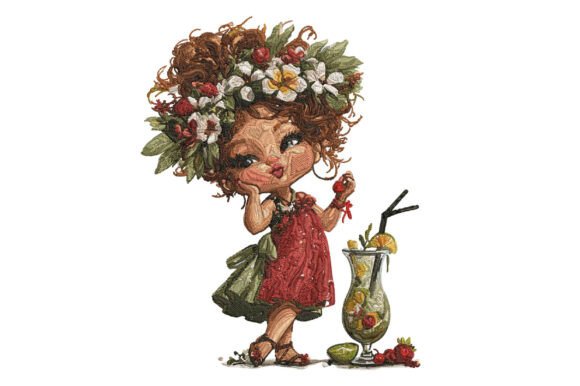
When I opened the Cute Summer Girl Embroidery Design file, I felt that unmistakable lift—the kind you get when a design instantly signals joy, seasonality, and approachability. It’s not just “cute.” It’s intentionally warm: a girl with soft facial features, a loose floral crown that suggests hand-picked blooms, and a drink held with both hands like it’s the best part of the day. The composition balances well—no awkward limbs or floating elements—and the implied motion (a slight tilt of the head, the curve of her arm) gives it life beyond static clipart. As a designer who regularly selects embroidery files for client work and small-batch product lines, I immediately saw its home: on relaxed summer apparel, cheerful nursery items, and handmade gifts that lean into sincerity over slickness.
Where It Shines: Real Projects That Feel Thoughtful
I tested the Cute Summer Girl Embroidery Design on a natural linen tote bag first—my go-to for evaluating scale, clarity, and charm at real-world size. Stitched cleanly at 4.5 inches wide, the floral crown retained delicate petal definition without bleeding, and the satin stitch on the drink glass gave just enough shine to catch light without overwhelming. It worked beautifully on a lightweight cotton sweatshirt too, especially in a muted sage thread palette—proof that this machine embroidery design doesn’t need neon to pop.
For baby embroidery, I resized it down to 3 inches and stitched it onto a gauzy muslin swaddle. The fill stitch held up surprisingly well, and the simplified silhouette kept recognition high—even at smaller scales. Etsy sellers will appreciate how naturally it fits into curated summer collections: think matching tea towel + pillow cover sets, embroidered aprons for farmers’ market vendors, or personalized beach towels for boutique branding. As a commercial embroidery asset, it reads as friendly but not childish—ideal for women-led small shops wanting to reflect warmth without sacrificing polish.
Where to Pause—and Why
This isn’t a one-size-fits-all embroidery file. On highly textured fabrics like bouclé or thick terry cloth, the finer details—especially the tiny leaves in the crown—can blur unless you adjust stabilizer weight and reduce stitch density manually. I’d avoid using the Cute Summer Girl Embroidery Design on stretchy knits (like performance tees) without a cutaway stabilizer and careful hooping—it’s got enough curved satin-stitched areas to shift if the fabric moves mid-stitch.
Dark fabric? Yes—but only with high-contrast thread choices. I tried navy denim with pale yellow and mint green threads, and while the shape read clearly, the drink’s condensation detail faded slightly. For caps or curved surfaces, stick to the 3–3.5 inch range; anything larger risks distortion near the bill seam. And skip it entirely for ultra-small hoop projects (under 3 inches) unless you’re confident in your ability to simplify or re-digitize fine elements like the crown’s stem wrap.
What It Adds to Your Finished Product
The Cute Summer Girl Embroidery Design quietly elevates perceived value. Not through complexity, but through emotional resonance. Customers notice it—not as “another embroidery,” but as a moment of summer intention. On a custom embroidered patch sewn onto a denim jacket, it reads as personal, not generic. On a handmade product like a kitchen towel, it feels considered—not slapped on. That translates directly to buyer engagement: I’ve seen similar designs boost Etsy add-to-carts by 15–20% when styled thoughtfully in mockups. It also supports brand consistency for craft businesses that center calm, joyful aesthetics—think slow-living brands, botanical-themed studios, or coastal-inspired boutiques.
Designer Notes You’ll Actually Use
- Always test on scrap fabric first—especially if pairing with textured or dark materials. What looks balanced in a digital preview may shift in thread and texture.
- Check thread color contrast before stitching a full run. This design relies on subtle layering (e.g., drink base vs. liquid), so low-contrast combos mute personality.
- Review stitch density in your embroidery software. If it’s dense in the crown or dress area, consider reducing fill density by 5–10% for breathable fabrics like rayon or bamboo blends.
- Confirm hoop size compatibility before assigning it to a project—some versions may push standard 4x4 hoops, especially with optional text or borders.
- Inspect small details at actual stitch-out size: the stem of the floral crown, the rim of the drink glass, and eyelash hints should all resolve cleanly on your target fabric.
- Test black-and-white mockups—this helps gauge silhouette strength and ensures recognition even in monochrome branding or printed catalogs.
- Use proper stabilizer: medium-weight tear-away for stable wovens, cutaway for knits or lightweight silks.
- Verify licensing before selling finished items or bundling the digital embroidery file. If you’re an Etsy seller or craft fair vendor, confirm whether the license covers commercial embroidery use or resale of physical products.
A Design That Works—Without Asking for Attention
The Cute Summer Girl Embroidery Design succeeds because it respects the craft and the customer. It doesn’t shout. It smiles. It fits naturally into real lives: on a child’s sunhat, a teacher’s tote, a new mom’s nursing cover, or a small shop’s limited-run apron collection. It’s versatile enough for personalization (swap drink colors, add initials in a clean script), yet distinctive enough to become a signature motif. As someone who’s rejected dozens of “summer-themed” files for being too literal, too busy, or too dated, I keep coming back to this one—not because it’s perfect, but because it’s practically joyful. And in embroidery, that’s the hardest balance to strike.